Thanks for subscribing.
Your gift is on the way.


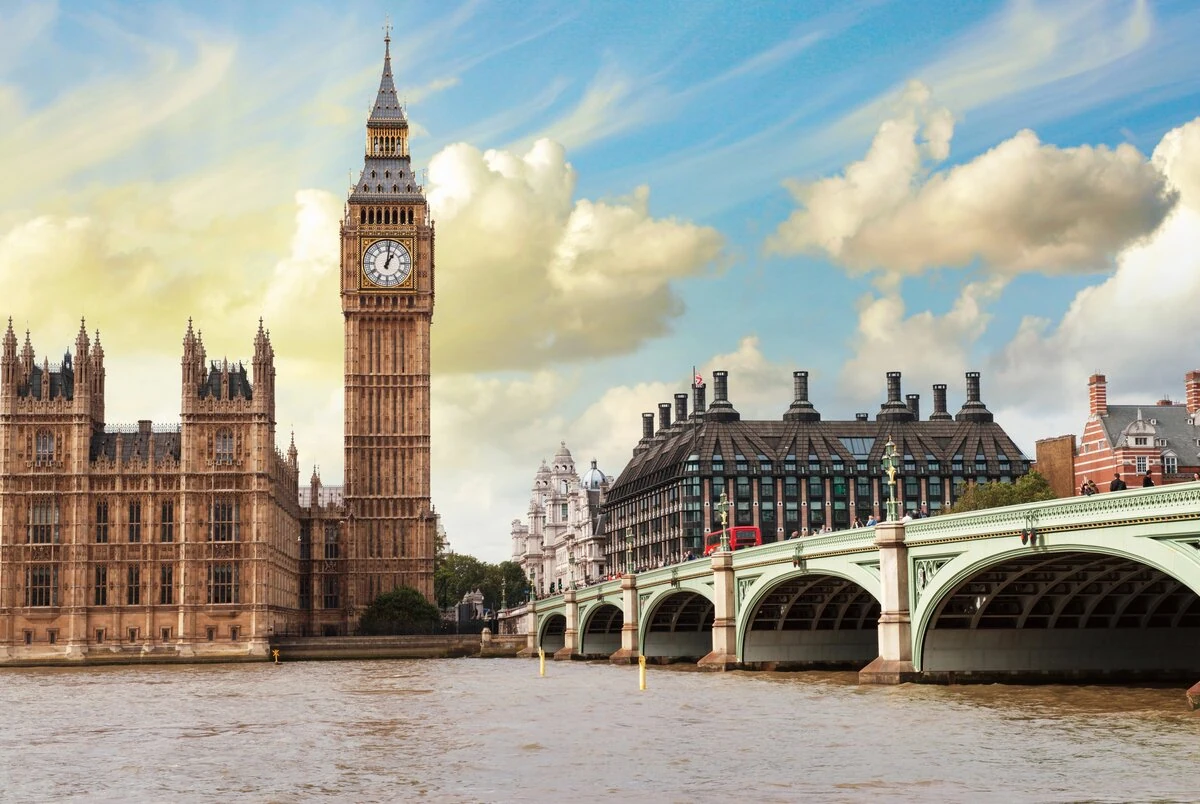
England is often reduced to a familiar set of images: red buses, afternoon tea, and the Royal Family. But beyond these well-worn clichés lies a country shaped by centuries of tradition, cultural contradictions, and unexpected detail. It’s a place where ancient laws coexist with modern life, where local customs often defy logic, and where history isn’t confined to museums – it’s embedded in everyday routines.
In 2024, the United Kingdom welcomed 42.6 million overseas visitors, with inbound visitor spending totaling about £32.5 billion, according to the Office for National Statistics. Cultural and heritage tourism continues to play a key role in this appeal.
The British Museum alone welcomed 5.8 million visitors in 2023, a 42% increase from the previous year, while sites like Windsor Castle remain among the most visited in the country.
But this article isn’t about crowd sizes or architectural landmarks. Instead, it turns the spotlight on the lesser-known aspects of England, the royal traditions that quietly persist, the strange laws still buried in legislation, and the inventions that originated here and quietly shaped the modern world.
What follows is a selection of ten distinctive facts that shed light on England’s cultural complexity, historical depth, and enduring charm.
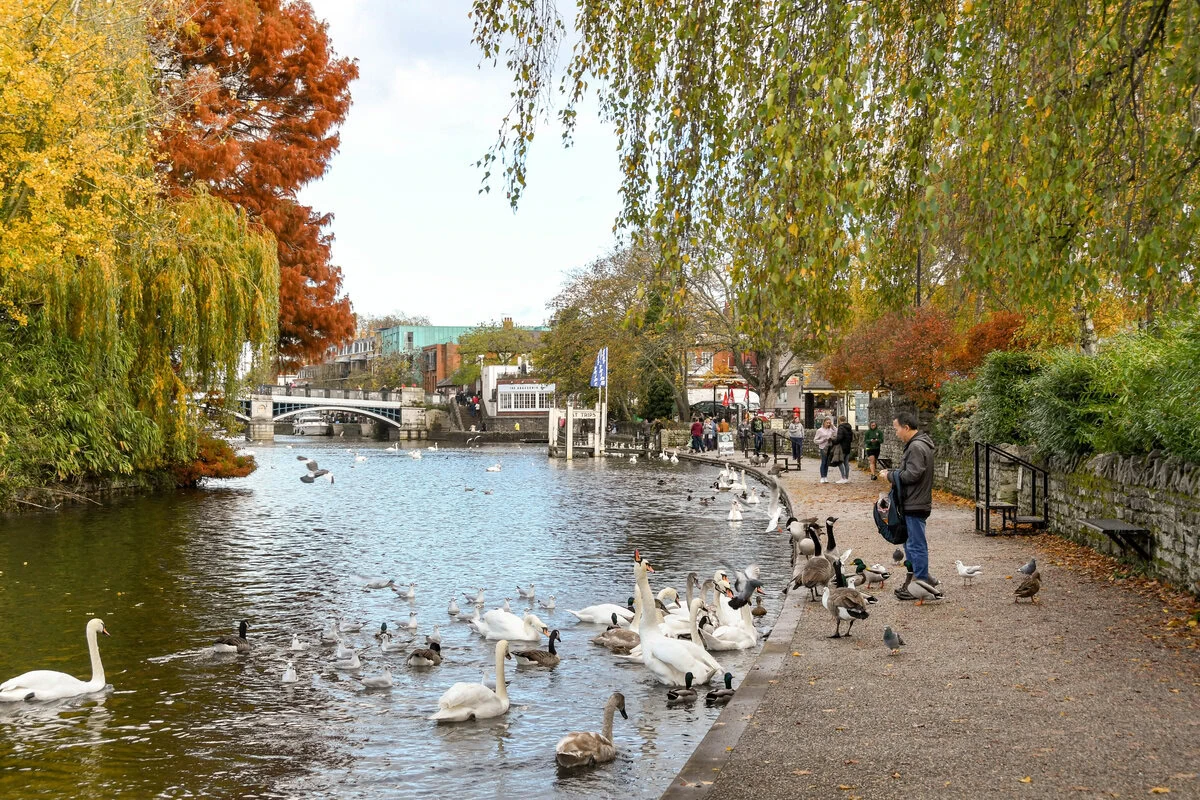
It might sound like folklore, but it’s a legal tradition that still holds today: All unmarked mute swans on certain stretches of the River Thames belong to the reigning monarch. This custom dates back to the 12th century, when swans were considered a delicacy and owning them was a symbol of wealth and status.
Each summer, the tradition of “Swan Upping” takes place, a ceremonial census where the King’s Swan Marker and teams from two livery companies (the Vintners’ and Dyers’ Companies) travel up the Thames to count, examine, and mark swan families. The event blends conservation with pageantry and still follows protocols observed for centuries.
While the swans are no longer destined for royal banquets, the tradition remains an example of England’s unique blend of legal continuity and cultural eccentricity.
In the early Victorian era, around the 1840s, the Duchess of Bedford, Anna Maria Russell, coined what would become a quintessential English tradition. Faced with a long gap between a midday lunch and a late evening dinner, she asked for a tray with tea, bread and butter, and cake around 4 PM to stave off what she called her “sinking feeling.” This practical request quickly became a ritual as she began inviting friends to join her, and the tradition of afternoon tea took root among the upper classes before spreading through society.
By the turn of the 20th century, afternoon tea had evolved into an elegant social event, complete with crustless finger sandwiches, scones, pastries, and the best china, attracting both aristocrats and visitors to tiered stands and drawing rooms.
Although commonly credited to the Duchess of Bedford, afternoon tea was not her sole invention. Historical evidence indicates that the habit of taking tea and light refreshments in the afternoon was already evolving; the Duchess played a key role in institutionalizing and popularizing it among high society.
Among England’s most famously peculiar statutes is one that makes it an offence to “handle salmon in suspicious circumstances.” This comes from Section 32 of the Salmon Act 1986 (later amended by the Marine and Coastal Access Act 2009), which specifies that anyone who receives, disposes of, or comes into possession of salmon, or other freshwater fish, under conditions where they knew or could reasonably believe the fish was illegally obtained, can be prosecuted. Though rarely applied in practice, the law is regularly cited as an example of British legal eccentricity.
Despite its humorous framing, the provision was enacted to deter poaching and unregulated fish trading. Its scope extends beyond salmon to include trout, eels, lampreys, smelt, and other freshwater species, highlighting its original intention, even if its wording invites jokes.
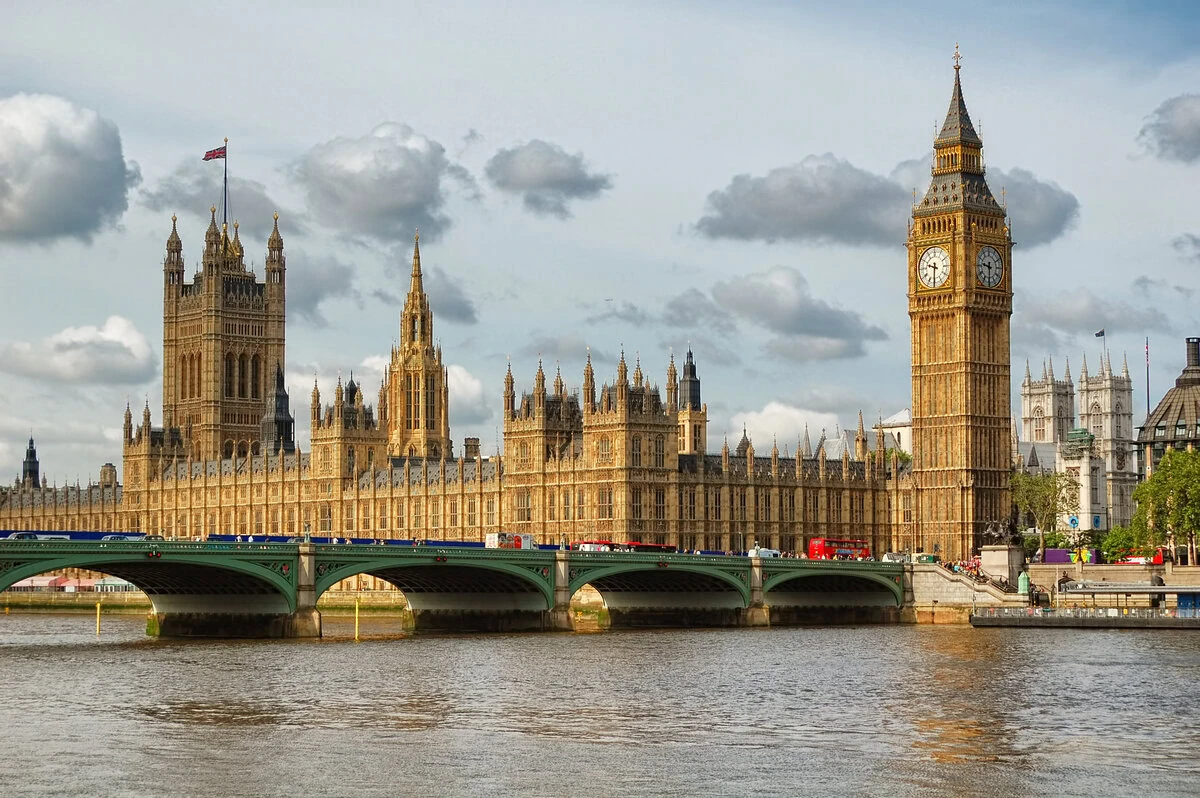
One of England’s most iconic landmarks is often misnamed. Contrary to popular belief, “Big Ben” refers only to the Great Bell within the structure, not the clock, and definitely not the tower itself. The tower was officially named Elizabeth Tower in 2012 (previously known simply as the Clock Tower) in honor of Queen Elizabeth II’s Diamond Jubilee.
Historically, Big Ben is the nickname given to the massive hour bell, which weighs approximately 13.5 tons (over 13700 kg) and first chimed in July 1859. While Sir Benjamin Hall is most commonly credited as the bell’s namesake, some believe it may have been named after the heavyweight boxing champion Ben Caunt. Over time, that nickname has been informally extended to the entire tower and clock.
London Zoo, officially known as the Zoological Society of London’s (ZSL) Regent’s Park facility, was founded in 1828. Originally established for scientific study, it opened its gates to the general public in 1847, making it the first public scientific zoo in the world.
Visitors in its early days included Charles Darwin. In March 1838, Darwin observed Jenny the orangutan at London Zoo, the first ape he had ever seen, and famously compared her behavior to that of a human child, an experience that influenced his evolving ideas on human origins.
Although English began in England, what makes it fascinating isn’t its origin but its evolution. Modern English is a chaotic blend of Anglo-Saxon, Norse, Latin, French, Greek, and even Hindi, making it more of a linguistic patchwork than a pure language. Words like bungalow (Hindi), shampoo (Hindi), trek (Afrikaans), piano (Italian), mosquito (Portuguese/Spanish), and robot (Czech/Slavic) coexist with ultra-British slang such as gobsmacked, wonky, skive, and kerfuffle. So while English was born in England, it became the world’s favourite word-hoarder along the way.
This evolution is reflected in the language’s staggering breadth: the Oxford English Dictionary (second edition) lists 171476 words in current use, plus 47156 obsolete words, and about 600000 total word-forms, including derivatives and combinations.
While counting every regional term, technical name, and scientific label might drive estimates over one million words, the 171000 figure remains the most commonly cited benchmark for usable English vocabulary today.
Consider this: words like gobsmacked, cheeky, chuffed, colloquial, and humorous have origins firmly rooted in English speech and continue to evolve through everyday use. Modern English adapts rapidly, absorbing new entries from technology, culture, and global exchange.
Together, these figures and the language’s enduring adaptability illustrate how England has been not just the cradle of English, but also its constant incubator, centuries into its still-expanding lexicon.
In 1596, Sir John Harington, an English courtier and godson of Queen Elizabeth I, designed and installed what is considered the first modern flushable toilet, which he named “Ajax.” The device used a cistern, a flush valve, and a wash-down system to dispose of waste, an innovation far ahead of its time, though it lacked an S‑bend to prevent odors from returning.
Harington reportedly installed a working model at Richmond Palace for the Queen and later built one in his own home in Somerset.
However, it wasn’t until 1775, when Scottish inventor Alexander Cumming patented a design with a crucial upgrade, the S‑trap, that the flush toilet gained widespread practicality and acceptance in Britain and beyond.
Remarkably, the flushable toilet had its origins in 16th-century England, centuries before indoor sanitation became ubiquitous. The invention highlights England’s role in sparking one of the world’s most essential and transformative technologies.
Because British passports are issued in the name of the reigning monarch, the monarch does not need to carry one when traveling internationally. The preamble in every passport begins with a request made “in the name of His Majesty,” which makes it unnecessary for the monarch to hold the document personally. All other royals, even senior figures such as the Prince and Princess of Wales and Queen Camilla, are required to use a standard British passport for international travel.
This exemption is rooted in long-standing royal prerogative, a constitutional convention that established the sovereign as the issuer of passports. Since passports are essentially issued by and on behalf of the monarch, it would be redundant for the monarch to possess one themselves.
So while King Charles III (and previously Queen Elizabeth II) can legally cross international borders without a passport, every other royal must still present one, just as you would at airport immigration.
England is said to host some of the oldest drinking establishments in the world, many of which began offering ale and hospitality long before modern pub culture existed. Among the most famous is Ye Olde Trip to Jerusalem in Nottingham, which claims its origin in 1189, when knights traveling to the Crusades stopped there for refreshment, making it one of the oldest recorded public houses in England.
Other contenders date from around the 10th or 11th centuries, often built into caves or using stone foundations that predate typical timber-framed medieval taverns. These venues evolved over centuries, serving as meeting points for travelers, locals, and in some cases, royalty.
While precise records from the 10th century are scarce and the exact founding dates are debated, the existence of inns and alehouses operating continuously for several centuries testifies to the deep-rooted tradition of public houses in English social and cultural life. Many of these pubs remain in operation today, blending historical architecture with modern hospitality.
England isn’t just full of ancient traditions; it’s also a hub of modern technological brilliance. London has recently been ranked the second-best global market for tech talent, only behind San Francisco, thanks to its deep pool of skilled professionals, vibrant academic infrastructure, and booming startup activity. Meanwhile, Cambridge boasts the densest concentration of tech talent in Europe; its ecosystem is so rich in innovation that even with a small population, it commands a tech enterprise valuation of over €162 billion. Beyond these, the South East region, including hubs like Oxford, Guildford, Brighton, and the M4 “Silicon Valley of England”, has seen explosive growth in AI, gaming, space, creative tech, and cybersecurity firms.
As a boutique tech recruitment and software development agency serving the UK market, DevsData LLC is perfectly positioned to connect clients with elite engineering talent from these high-growth hubs, whether they seek AI specialists in Cambridge, startup-savvy developers in London, or creative tech experts in the sunny South East. With access to such innovation hotspots, DevsData LLC brings insider knowledge and a premium network to tech staffing and development needs.
England’s character is often defined by contrast: a nation where royal protocols meet offbeat laws, where cutting-edge ideas coexist with medieval traditions, and where cultural influence stretches far beyond its borders. From the invention of the flushable toilet to the linguistic evolution of modern English, many of the world’s everyday systems and expressions can trace their roots back to England.
But what truly sets the country apart is its embrace of the distinctive and the ceremonial. Swans marked by royal decree, laws that criminalize suspicious fish handling, and monarchs who travel without passports are more than just trivia; they are reflections of a place where history lingers in ordinary life. Even its pubs serve as time capsules, offering pints where travelers have gathered for over a thousand years.
These 10 facts only scratch the surface. England remains a country that defies simplification, full of contradiction, charm, and curiosity. Whether you’re planning a visit, studying its culture, or simply enjoying the unexpected, one thing is certain: England always has more stories to tell.
Discover how IT recruitment and staffing can address your talent needs. Explore trending regions
like Poland, Portugal, Mexico, Brazil and more.

 Frequently asked questions (FAQ)
DevsData – your premium technology partner
DevsData is a boutique tech recruitment and software agency. Develop your software project with veteran engineers or scale up an in-house tech team of developers with relevant industry experience.
Free consultation with a software expert
🎧 Schedule a meeting
FEATURED IN


DevsData LLC is truly exceptional – their backend developers are some of the best I’ve ever worked with.”

Nicholas Johnson
Mentor at YC, serial entrepreneur

 Build your project with our veteran developers.
Explore the benefits of technology recruitment and tailor-made software.
Learn how to source skilled and experienced software developers.
Build your project with our veteran developers.
Explore the benefits of technology recruitment and tailor-made software.
Learn how to source skilled and experienced software developers.

Rebecca Botvin

Commercial Director

Tom Potanski
Manager




Categories: Big data, data analytics | Software and technology | IT recruitment blog | IT in Poland | Content hub (blog)
















careers@devsdata.com









general@devsdata.com

"I interviewed about a dozen different firms. DevsData LLC is truly exceptional – their backend developers are some of the best I've ever worked with. I've worked with a lot of very well-qualified developers, locally in San Francisco, and remotely, so that is not a compliment I offer lightly. I appreciate their depth of knowledge and their ability to get things done quickly."

Nicholas Johnson
CEO of Orange Charger LLC,
Ex-Tesla Engineer,
Mentor at YCombinator
"DevsData reached out to us, as we've been looking to grow our engineering team in Europe and Poland. Communicating efficiently and professionally, DevsData made a strong impression with their understanding of the recruitment challenges we were facing. They designed a tailored recruitment process for our needs. I was impressed with the technical depth of their approach."

Karim Butt
Co-Founder & CTO at GlossGenius, Inc.
"Out of all the vendors we work with, DevsData clearly stands out. The quality of developers they deliver is beyond what we've received from any other vendor, and they've been able to send profile recommendations very quickly. I'm happy to be their reference for other companies from Israel and talk about their recruitment abilities and what they delivered for us."

Ran Eyal
Senior Manager at
ZIM Integrated
Shipping Services Ltd.
"DevsData demonstrated a strong degree of proactivity, taking time to thoroughly understand the problem and business perspective, and continuously suggesting performance and usability enhancements. Their app exceeded my expectations. I've worked with DevsData on numerous projects over the last 3 years and I'm very happy. Being both responsive and honest in communication."

Jonas Lee
Partner & Executive VP of Verus,
Financial LLC, Investor,
& Serial Entrepreneur
Acknowledgments