Thanks for subscribing.
Your gift is on the way.


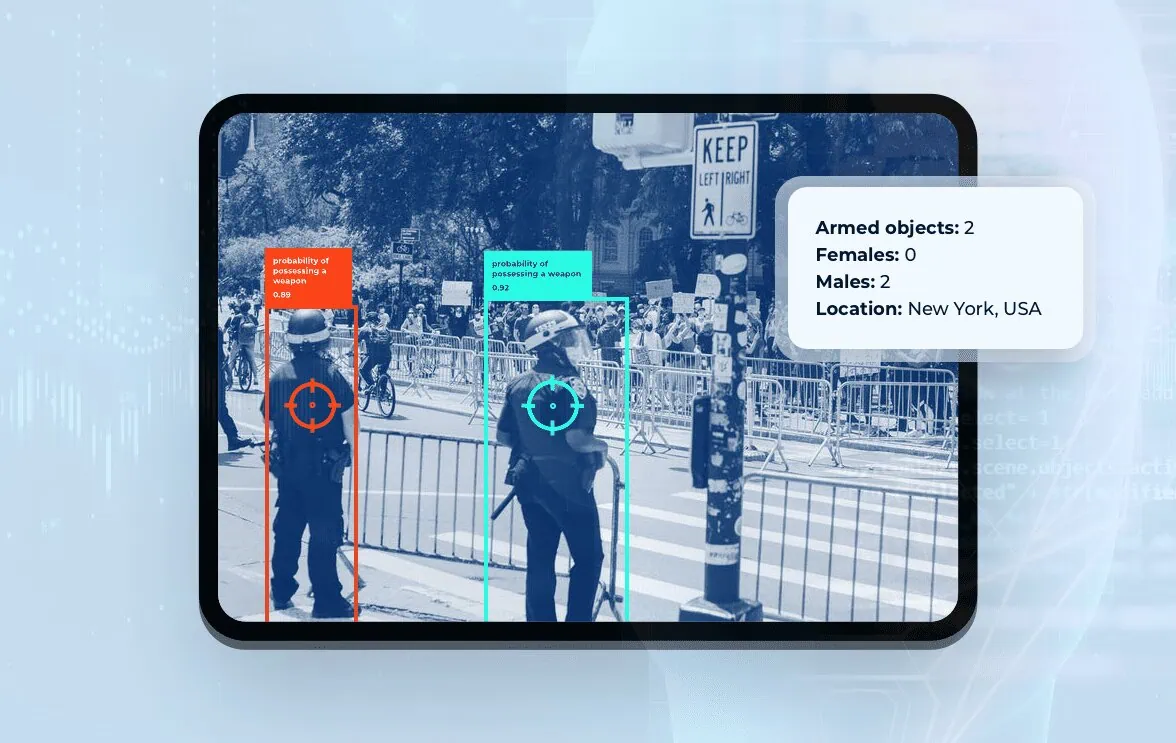
DevsData LLC partnered with Aitech Systems Ltd., a defense technology company, to develop an advanced Computer Vision solution capable of detecting human posture in real time. Designed for deployment on low-cost devices equipped with Nvidia Jetson GPUs, the system achieved high accuracy with minimal latency. The result is a performance-optimized application built for speed and operational reliability.
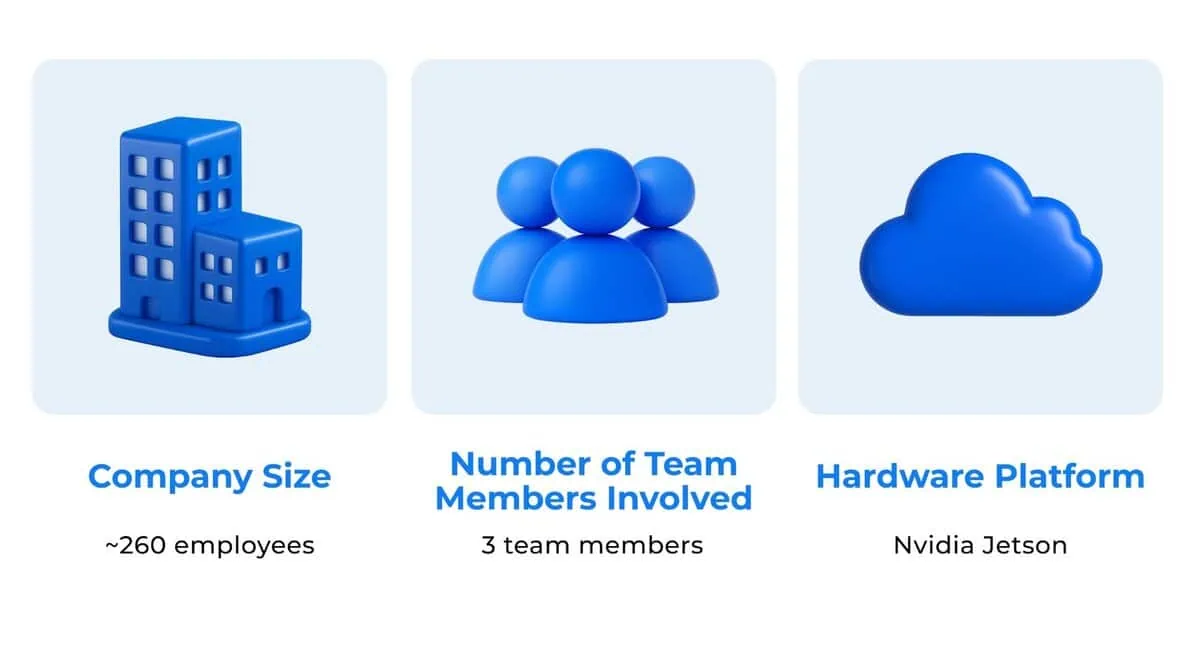
Aitech Systems Ltd. is an Israeli defense technology company recognized for its expertise in embedded computing, edge AI, and real-time mission systems. Established in 1983, the company has played a pivotal role in developing intelligent solutions for the aerospace, defense, and security sectors, delivering ruggedized hardware and advanced software designed to perform reliably under extreme operational conditions.
Backed by decades of engineering expertise, Aitech continues to expand its work in computer vision and system automation, supported by a team of more than 260 professionals and an annual revenue of approximately $33.1 million. Aitech’s technologies underpin a broad range of defense and aerospace applications, including autonomous platforms, unmanned systems, tactical surveillance tools, and real-time situational-awareness solutions. The company’s portfolio features advanced products such as the A179 Lightning GPGPU and the Space Digital Backbone (DBB), both built to withstand demanding operational environments.
Do you have IT recruitment needs?
The challenge presented to DevsData LLC was to design and implement a performance-optimized algorithm capable of detecting human figures, posture, and center of mass in live video streams, while maintaining minimal latency and reliable accuracy. The project required deep technical understanding of both low-level image processing and hardware acceleration, demanding a custom-built architecture rather than reliance on conventional AI models.
Aitech Systems sought to enhance its defense-grade video analytics capabilities with a real-time human posture detection solution that could operate on compact, low-cost hardware. The system needed to accurately identify human contours and movement patterns from live video feeds and perform consistently across a range of environmental conditions, including poor lighting, motion blur, and rapidly changing backgrounds. Achieving this required a level of performance and optimization that exceeded what standard computer vision frameworks could deliver out of the box.
A critical limitation stemmed from the hardware environment itself. The platform had to run on Nvidia Jetson devices, which provide limited GPU capacity compared to full-scale computing systems. This constraint made traditional deep learning approaches computationally infeasible, as they would have resulted in excessive latency and power consumption. To meet Aitech’s operational requirements, the solution had to be lightweight, efficient, and precisely optimized for the available hardware resources, without compromising detection accuracy or real-time responsiveness.
Delivering real-time human detection on low-power Nvidia Jetson hardware required careful optimization in areas where deep learning models were not practical.
From the outset, DevsData LLC structured its approach around precision optimization, replacing conventional deep learning methods with a custom-built algorithm capable of maintaining accuracy while running efficiently on Nvidia Jetson devices. The goal was to merge performance, stability, and speed without exceeding the platform’s computational limits.
Drawing from our experience in developing AI-powered activity detection systems for SkyCatch, Inc., where we built a computer vision engine for drone-based monitoring, we recognized that real-world constraints often demand hybrid architectures rather than purely neural solutions. In the Aitech project, this insight proved essential. For Aitech, the requirement was not just technical accuracy – the system had to deliver real-time results on low-power hardware, remain cost-efficient to operate, and be reliable enough for continuous on-site use. A deep-learning-first approach would have increased hardware costs, extended model-update cycles, and introduced latency risks the client could not accommodate.
With these limitations in mind, we evaluated alternative architectures that could meet both the performance targets and the operational realities. This led us to a C++ and Python hybrid pipeline, integrating the OpenCV library with custom CUDA bindings. This setup enabled effective GPU acceleration without the overhead of full-scale deep learning frameworks, giving Aitech the balance of speed, accuracy, and resource efficiency the project required.
The development process followed three guiding principles:
By combining algorithmic engineering with GPU-level optimization, DevsData LLC delivered a system designed to operate where most machine learning models could not, achieving both computational efficiency and real-time detection accuracy on constrained military hardware.
A three-person DevsData LLC team led the project, consisting of a C++/GPU engineer, a computer vision specialist, and a project manager. Before any coding began, the team conducted a detailed review of Aitech’s goals, operational environment, and hardware constraints. This included clarifying functional requirements, validating the choice of Nvidia Jetson as the deployment platform, and defining measurable success criteria such as latency thresholds, detection accuracy, and continuous uptime expectations. The client provided an initial set of technical assumptions, but DevsData LLC expanded them through additional analysis to ensure that the architecture would remain stable in real-world manufacturing conditions.
This upfront alignment shaped the execution plan. The compact team structure enabled rapid iteration, direct communication with Aitech’s product owners, and fast validation cycles. Weekly check-ins, demo sessions, and shared test protocols ensured that every milestone – from the initial feasibility tests to the final optimization phase, reflected both functional and operational requirements. Despite the technical limits of Jetson devices, the team delivered the first fully functional prototype in about six weeks, confirming that real-time posture detection was achievable without deep-learning models.
During development, the primary focus was building a high-performance Computer Vision system that could identify human contours and estimate posture in real time within the Jetson’s restricted computational budget. Instead of relying on neural networks, the team designed a lightweight solution based on classical image-processing methods, enhanced through targeted GPU acceleration and optimized code structure.
To support both speed and maintainability, DevsData LLC implemented a hybrid C++/Python architecture. Core computational modules were written in C++ for maximum throughput, while Python acted as a flexible control layer for integrating business logic, system orchestration, and client-specific configuration. OpenCV handled complex operations such as contour extraction, edge detection, and segmentation, while custom CUDA bindings allowed critical algorithms to run directly on Jetson GPU cores. This architecture balanced low-level performance with a high-level interface that the client could later extend or integrate into broader systems.
Client collaboration remained central throughout the process. Aitech provided test footage, real-world environment samples, and feedback on detection behavior, which guided iterative refinement. DevsData LLC mirrored this with structured testing on varied lighting and background conditions, ensuring the solution would perform consistently on the factory floor.
Several optimization techniques were introduced to stabilize accuracy under changing environments. Bloom filters, adaptive thresholding, and noise-reduction algorithms improved detection in challenging lighting. Mathematical modeling was applied to estimate the center of mass and reliably outline human contours. The result was software capable of near-zero-latency processing on live streams while maintaining stable accuracy on resource-limited embedded hardware.
Do you have IT recruitment needs?
Before finalizing the implementation, DevsData LLC advised Aitech on the target system architecture and the technologies best suited for real-time processing on embedded hardware. This stage combined business analysis with deep technical evaluation: assessing the performance limits of Nvidia Jetson devices, comparing potential image-processing pipelines, and identifying which components needed GPU acceleration to meet the client’s latency constraints.
Our experience with edge-deployed computer vision systems allowed us to propose a stack that balanced speed, stability, and long-term extensibility. The result was a modular architecture built around lightweight algorithms, efficient GPU utilization, and a clean separation between computation, orchestration, and optimization layers. The table below outlines the key components of this design and the functional role each played within the final solution.
| Layer | Technologies and Tools Used | Purpose / Functionality |
|---|---|---|
| Core Algorithm | C++ with OpenCV | Real-time contour extraction, motion tracking, and edge detection. |
| Integration Layer | Python | System orchestration, data flow management, and module communication. |
| GPU Acceleration | CUDA via custom bindings | Leveraged Nvidia Jetson GPU for high-speed parallel computation. |
| Optimization Tools | Bloom filters, adaptive thresholding | Enhanced accuracy and resilience under variable lighting. |
| Hardware Platform | Nvidia Jetson | Low-power embedded GPU hardware for field-ready deployment. |
The delivered software successfully met Aitech’s performance criteria, including real-time processing on Nvidia Jetson hardware, low-latency detection suitable for continuous on-site use, and stable contour tracking across varied lighting and background conditions. Its modular design also allowed for easy future extension, including ongoing work on gesture recognition and body-part segmentation, ensuring long-term adaptability within Aitech’s defense systems.
The collaboration delivered more than a high-efficiency computer vision system; it provided Aitech with a reliable, cost-effective foundation for real-time human-posture analysis across defense-grade environments. The final software met all previously defined performance criteria, including real-time processing on Nvidia Jetson hardware, low-latency inference suitable for continuous field operation, and stable contour detection under diverse lighting and motion conditions. By eliminating the need for heavy deep learning models, the system reduced hardware requirements and long-term maintenance costs while preserving the precision needed for mission-critical applications. Because the entire solution was developed end-to-end by DevsData LLC, the engineering decisions, optimization strategy, and implementation quality were fully unified across all development stages.
Beyond the technical gains, the lightweight architecture directly strengthened Aitech’s operational flexibility. The reduced power consumption and lower computational load allowed the system to be deployed on compact, ruggedized devices without requiring additional infrastructure upgrades. Field tests confirmed that the software could run reliably in dynamic, unpredictable environments – an outcome that aligned with the client’s need for dependable on-site analytics in defense and surveillance scenarios.
The project also delivered clear strategic value. The modular design and GPU-level optimizations established a scalable platform for future development, enabling Aitech to accelerate its roadmap for visual-intelligence capabilities. The implemented algorithms now serve as the foundation for ongoing work on gesture recognition and body-part segmentation, giving the client a strong technical baseline for expanding real-time human-behavior analysis across multiple product lines.
After delivering the posture detection system, the collaboration between Aitech Systems Ltd. and DevsData LLC continues with further algorithmic development. The next phase focuses on extending the current solution to support real-time body-part segmentation and gesture recognition, enabling more detailed interpretation of human movement on live video streams.
These ongoing enhancements are designed to expand the system’s analytical capabilities while maintaining the same level of performance and efficiency on limited hardware resources. The project’s progression illustrates how continuous optimization and targeted feature development can strengthen real-time vision systems for defense applications.
Looking to enhance your existing AI system or develop new real-time vision technology? Contact DevsData LLC to build high-performance solutions tailored for precision and reliability. Reach out to us at general@devsdata.com or visit our website at www.devsdata.com.
Any questions or comments? Let me know on Twitter/X.
Discover how IT recruitment and staffing can address your talent needs. Explore trending regions like Poland, Portugal, Mexico, Brazil and more.

DevsData – your premium technology partner
DevsData is a boutique tech recruitment and software agency. Develop your software project with veteran engineers or scale up an in-house tech team of developers with relevant industry experience.
Free consultation with a software expert
🎧 Schedule a meeting
FEATURED IN


DevsData LLC is truly exceptional – their backend developers are some of the best I’ve ever worked with.”

Nicholas Johnson
Mentor at YC, serial entrepreneur


 Build your project with our veteran developers.
Explore the benefits of technology recruitment and tailor-made software.
Learn how to source skilled and experienced software developers.
Build your project with our veteran developers.
Explore the benefits of technology recruitment and tailor-made software.
Learn how to source skilled and experienced software developers.

Rebecca Botvin

Commercial Director

Tom Potanski
Manager




Categories: Big data, data analytics | Software and technology | IT recruitment blog | IT in Poland | Content hub (blog)
















careers@devsdata.com









general@devsdata.com

"I interviewed about a dozen different firms. DevsData LLC is truly exceptional – their backend developers are some of the best I've ever worked with. I've worked with a lot of very well-qualified developers, locally in San Francisco, and remotely, so that is not a compliment I offer lightly. I appreciate their depth of knowledge and their ability to get things done quickly."

Nicholas Johnson
CEO of Orange Charger LLC,
Ex-Tesla Engineer,
Mentor at YCombinator
"DevsData reached out to us, as we've been looking to grow our engineering team in Europe and Poland. Communicating efficiently and professionally, DevsData made a strong impression with their understanding of the recruitment challenges we were facing. They designed a tailored recruitment process for our needs. I was impressed with the technical depth of their approach."

Karim Butt
Co-Founder & CTO at GlossGenius, Inc.
"Out of all the vendors we work with, DevsData clearly stands out. The quality of developers they deliver is beyond what we've received from any other vendor, and they've been able to send profile recommendations very quickly. I'm happy to be their reference for other companies from Israel and talk about their recruitment abilities and what they delivered for us."

Ran Eyal
Senior Manager at
ZIM Integrated
Shipping Services Ltd.
"DevsData demonstrated a strong degree of proactivity, taking time to thoroughly understand the problem and business perspective, and continuously suggesting performance and usability enhancements. Their app exceeded my expectations. I've worked with DevsData on numerous projects over the last 3 years and I'm very happy. Being both responsive and honest in communication."

Jonas Lee
Partner & Executive VP of Verus,
Financial LLC, Investor,
& Serial Entrepreneur
Acknowledgments