Thanks for subscribing.
Your gift is on the way.
 Link copied



Software quality assurance is mission-critical in a world where one bug can ruin an app’s rating or delay a product launch. QA ensures that your application functions correctly, remains bug-free, and delivers the expected user experience.
Many companies, from fast-scaling startups building their first mobile apps to global enterprises like banks, eCommerce retailers, and healthcare providers, outsource QA instead of building an internal team. Offshore QA software testing teams provide a cost-effective way to access specialized expertise, accelerate development, and reduce costs without compromising quality.
At DevsData LLC, we’ve partnered with clients such as The Globe and Mail, SyrenCloud, Inc., and Sea, a global maritime software provider. In each case, QA was mission-critical – from new product launches to digital transformation projects. For example, with Sea, we recruited senior QA professionals to build a Polish engineering hub, introducing scalable testing frameworks that improved delivery pipelines. Similarly, a London-based cryptocurrency exchange relied on our QA experts to secure its algorithmic trading platform. These projects highlight how DevsData LLC helps clients accelerate time-to-market, ensure compliance, and deliver reliable user experiences.
In this article, we share everything we’ve learned from delivering offshore QA services across industries. You’ll gain a clear understanding of how offshore QA works, what a typical team structure looks like, and the most common types of software testing used today. We also explore the real-world benefits and challenges of outsourcing, provide guidance on selecting the right QA partner, and offer insights from our hands-on experience at DevsData LLC. Finally, we highlight key trends that are shaping the future of quality assurance, helping you make smarter, more scalable testing decisions. If you’re exploring a better, more scalable approach to software testing, this guide will help you do it right.
Offshore QA software testing is the practice of partnering with a quality assurance team located in a different country to handle the testing phase of your software development process.
Instead of hiring and managing testers in-house, businesses work with skilled QA professionals abroad who are fully dedicated to testing and validating their products.
This setup enables companies to tap into a broader talent pool, reduce costs, and expand testing coverage across different time zones. Offshore QA teams can handle everything from manual testing and automated scripts to regression testing, performance checks, and user acceptance testing.
It’s important to distinguish different outsourcing models:
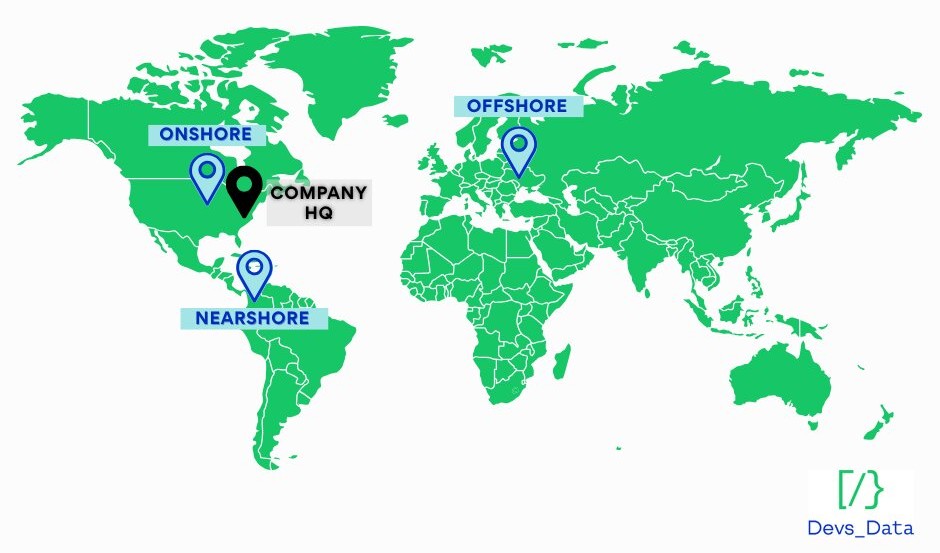
Offshoring QA is no longer just about saving money. It’s about scaling faster, releasing higher-quality products, and having the flexibility to adapt your testing efforts as your project evolves. When done right, offshore QA becomes an integrated part of your team, aligned with your workflows, committed to your quality standards, and ready to move at your pace.
A strong QA team is more than just one or two testers clicking through features. It’s a mix of roles, each focused on different parts of the testing process. When you work with an offshore QA team, here’s who you’ll typically find on board:
| Role | Responsibilities |
|---|---|
| QA Engineers | Core testers who write test cases, perform manual testing, report bugs, and validate software functionality and usability. |
| Automation Testers | Develop and maintain automated scripts to handle repetitive testing tasks, especially useful for regression testing and frequent releases. |
| QA Lead/Test Manager | Oversees the entire QA process – defining strategy, assigning tasks, reviewing progress, and ensuring quality standards and timelines are met. |
| Performance and Security Testers | Focus on performance under load and application security. Ideal for high-traffic apps or those handling sensitive data. |
| Mobile and Web Testers | Specialize in platform-specific issues like mobile responsiveness, touch functionality, and cross-browser behavior. |
| Business Analyst/Product Owner (optional) | Acts as the bridge between business goals and QA execution, ensuring alignment, clear priorities, and reduced communication gaps. |
When managing offshore QA teams, structure matters as much as roles. Effective onboarding, shared documentation, and strong leadership from the QA lead help remote testers integrate smoothly. Regular syncs across time zones, use of collaborative tools (Jira, Slack, TestRail), and overlapping working hours ensure the team operates as a cohesive unit rather than a disconnected extension.
Working with an offshore QA team isn’t just about outsourcing tasks. It’s about building a smooth, structured collaboration that fits into your product development cycle. Here’s how the process typically works:
At DevsData LLC, every QA engagement begins with a kickoff call where our QA lead and the client align on scope, tools, and communication. Based on our experience, introducing shared Jira boards and Slack channels on day one can reduce onboarding time by up to 30%. For example, in a retail eCommerce project, this approach accelerated alignment and allowed our QA engineers to deliver the first actionable reports within a week.
We design testing strategies tailored to the client’s product and release cycles, striking a balance between manual and automated testing. In a FinTech engagement, DevsData LLC’s QA team built Selenium-based regression scripts integrated into the client’s CI/CD pipeline, enabling them to double their release frequency, from weekly to twice a week, without compromising quality. Our know-how in CI/CD automation is one of the reasons clients return to us for long-term QA partnerships.
Once the setup is complete, our QA engineers run both manual and automated tests across the agreed-upon test cases and user flows. Each defect is logged with screenshots, videos, or logs and reported to developers through Jira or a similar ticketing system. For instance, during a Sea platform scaling project, DevsData LLC’s QA engineers uncovered critical concurrency issues that could have affected thousands of users – preventing what would have been a costly post-launch incident.
Do you have QA needs?
DevsData LLC’s QA and engineering teams are tightly integrated, ensuring reported issues are retested promptly after fixes. We emphasize regression testing to make sure nothing breaks along the way. In one logistics software project, this disciplined approach reduced repeated bug cycles, strengthening product stability over successive releases.
The offshore QA team provides regular updates, typically on a daily, weekly, or per-sprint basis. These updates include test results, bug trends, test coverage summaries, and risk areas. Well-documented reports help the product team understand what’s working, what’s broken, and what needs attention before launch. Proper documentation also makes future testing more efficient and traceable.
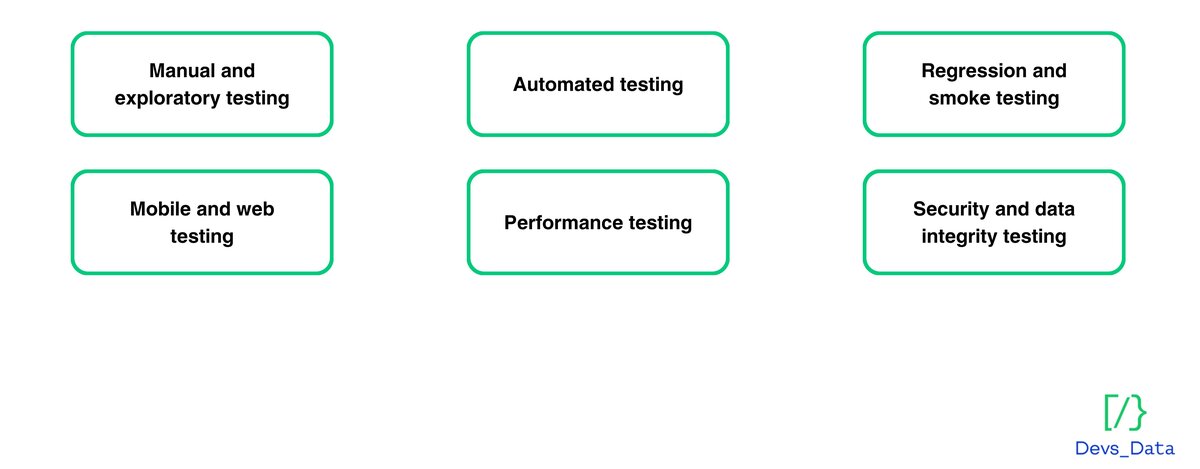
A reliable offshore QA team should be able to cover a wide range of testing needs, not just basic bug checks.
At DevsData LLC and across the industry, the most effective QA partnerships incorporate a combination of manual and automated testing, along with specialized testing tailored to the product type and industry.
Here are the key types of testing commonly offered:
Manual and exploratory testing form the foundation of any QA effort. Our testers approach your product like end-users would, exploring features, testing edge cases, and catching visual or functional bugs that automation might miss. This is especially effective during early development phases or for apps with frequent UI changes, like an eCommerce platform testing dynamic product filters or checkout flows.
Automated testing boosts speed and consistency by handling repetitive tasks such as login validations or form submissions. Using tools like Selenium or Playwright, our engineers write scripts that fit seamlessly into CI/CD pipelines. For example, in the Sea project, our QA engineers established scalable testing processes and introduced automation tools that became the foundation for faster, more reliable releases.
Regression and smoke testing ensure that updates don’t accidentally break existing features. Smoke tests help identify critical failures immediately after a new build is deployed, while regression testing verifies that key functionalities continue to function properly after changes. This is essential for products under continuous development, such as marketing platforms or social apps with frequent updates.
Mobile and web testing address cross-device and cross-browser consistency. Our teams test mobile apps on real iOS and Android devices, examining gesture behavior, push notifications, and layout issues across various screen sizes and resolutions. We also test web apps for responsiveness and compatibility with browsers like Chrome, Safari, and Firefox, which is crucial for client-facing portals or booking systems.
Performance testing simulates traffic surges and concurrent usage to reveal bottlenecks. For instance, we helped a logistics platform identify and fix slowdowns that occurred when over 500 users submitted forms simultaneously. These tests ensure your app remains fast and stable under real-world conditions.
Security and data integrity testing are crucial in industries such as healthcare, finance, and legal technology. Our QA engineers perform checks to ensure safe data migration, validate encryption protocols, and identify vulnerabilities, such as exposed APIs or insecure authentication. In one healthcare case, we helped a client achieve GDPR compliance by identifying data exposure risks before launch.
Offshore QA provides significant benefits for companies seeking to scale more quickly, reduce costs, and maintain high product quality. However, like any outsourcing model, it comes with trade-offs. Understanding both the benefits and the challenges will help you decide whether it’s the right move for your organization.
| Benefit | Why it matters | DevsData LLC experience |
|---|---|---|
| Lower costs | Offshore teams reduce expenses related to salaries, hiring, infrastructure, and training, freeing up budget for core development and innovation. | At DevsData LLC, clients save 30-40% on QA costs by leveraging our Central European and LATAM hubs, without sacrificing quality. |
| Access to global talent | Tap into a diverse pool of skilled QA professionals with experience across domains and industries – no need to rely solely on local hiring. | We’ve built QA teams for FinTech, HealthTech, and eCommerce companies, drawing from our vetted network of 65k+ candidates. |
| Faster testing cycles (24/7 workflow) | Time zone differences enable continuous testing and faster feedback loops, accelerating release cycles and improving development efficiency. | For Sea’s Central European hub, overlapping hours between Europe and Asia allowed QA engineers to deliver daily updates that kept development moving overnight. |
| Specialized QA expertise | Offshore providers often bring niche knowledge in automation, security, performance, and domain-specific testing that’s expensive or slow to build in-house. | Our QA specialists introduced automation frameworks from scratch for a HealthTech SaaS company, reducing the manual workload. |
| Scalability and flexibility | QA teams can quickly scale up or down depending on your project needs, without long-term staffing commitments. | In a logistics software project, DevsData LLC scaled a QA team from 2 to 8 engineers within weeks to meet a critical release deadline. |
| Improved product quality | Thorough test coverage and specialized attention reduce bugs, boost platform stability, and enhance the end-user experience. | In a SaaS platform scaling project, DevsData LLC’s QA team caught concurrency issues pre-launch, preventing thousands of potential user errors. |
| Internal focus | Your in-house developers can focus on building features while QA teams handle testing, improving overall productivity and code velocity. | Clients like Shipwell and Sea report improved developer velocity when QA responsibilities are owned fully by our offshore teams. |
While offshore QA offers real value, it’s not without its complexities. Success depends on how well you manage collaboration, communication, and context. By being aware of the common pitfalls and planning around them, you can avoid costly missteps and build a more effective partnership.
| Challenge | What to watch for | How DevsData handles it |
|---|---|---|
| Time zone and communication gaps | Delays or misunderstandings can occur without strong collaboration practices. Daily syncs and clear documentation help mitigate this. | We set up shared Jira boards, Slack channels, and overlapping working hours. Our QA engineers participate in daily stand-ups, retrospectives, and sprint planning to ensure smooth communication. |
| Onboarding and knowledge transfer | Getting offshore QA teams up to speed requires upfront effort, including sharing product knowledge, test cases, and clear expectations. | DevsData LLC starts with a structured knowledge-transfer phase: product walkthroughs, test case reviews, and environment setup. For Sea, this accelerated QA readiness in under 2 weeks. |
| Data security and compliance | QA testing often involves handling sensitive data. Choose providers with strong security practices, especially in regulated industries. | We enforce strict NDAs, GDPR/CCPA compliance, and use secure testing environments. For a FinTech client, DevsData LLC introduced masked test datasets to meet compliance without slowing QA cycles. |
| Cultural and process differences | Different working styles or QA standards can lead to friction. Align expectations early and use shared tools and workflows. | Our engineers are trained to align with Agile practices. Most have worked in distributed, cross-cultural teams before. In a US-Poland collaboration, we bridged process gaps with clear sprint rituals. |
| Lack of product context | External teams may miss business nuances without close collaboration. Involving QA in early discussions helps align priorities. | We involve QA early, during backlog grooming and requirement discussions, so testers understand business goals, not just technical tasks. |
Offshore QA services offer companies a strategic approach to enhance product quality, expedite testing cycles, and reduce costs by leveraging global talent and specialized expertise. The model allows for flexible scaling and helps internal teams stay focused on development. However, success depends on overcoming key challenges, such as communication gaps, onboarding delays, and ensuring data security. With the right partner and transparent processes, offshore QA can deliver significant value without compromising control or quality.
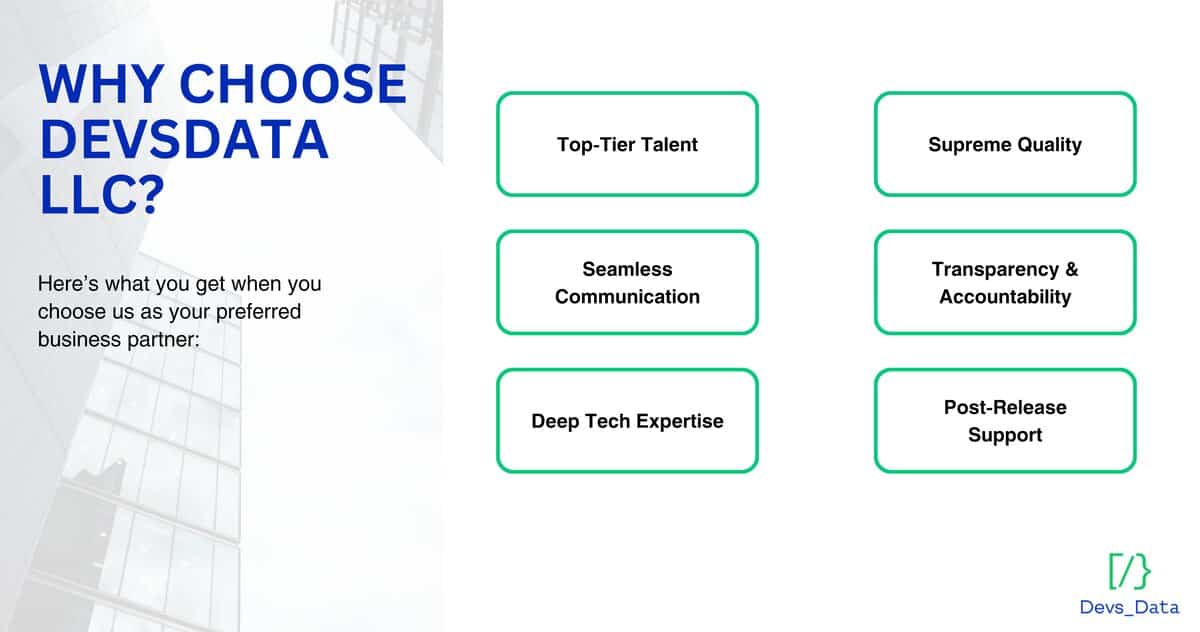
Choosing the right offshore QA partner isn’t just about finding a vendor – it’s about finding a team that fits your workflow, understands your product, and can deliver reliable results. A poor fit can slow you down or create more work than it solves.
Here’s how to make a confident, informed decision:
Before looking for a partner, clearly define your needs. What types of testing are required: manual, automated, mobile, or regression? Do you need full-time testers or support during crunch periods? The more specific your scope, the easier to find a match.
Not all QA teams are built the same. Look for partners with:
Bonus points if they’ve worked with companies of similar size or stage.
A team might have the skills, but if communication is weak, the project will suffer. During the early talks, pay attention to:
Ask about their tools, Jira, TestRail, Slack, and Zoom, and how often they report progress.
Different projects need different levels of support. A good QA partner will offer options like:
Select a model that aligns with your workload, budget, and desired level of control/oversight.
You’ll likely be sharing code, databases, and infrastructure. Choose a partner who:
Ask direct questions about how they manage security and risk.
Even the best-looking partners should prove themselves. Start with a small scope or trial sprint. This gives you a chance to assess:
At DevsData LLC, we recommend starting with a limited scope or trial sprint to evaluate testing quality, collaboration style, and speed. Once proven, scaling up is straightforward and low-risk.
Do you have QA needs?
At DevsData LLC, we don’t just place QA engineers on projects; we build QA partnerships. We aim to deliver real value: faster releases, cleaner code, and reliable collaboration seamlessly fitting into your workflow.
Here’s how we make that happen:
We don’t believe in one-size-fits-all. Every project is different, so we start by understanding your needs:
Once we’re clear on that, we handpick QA engineers from our vetted talent pool based on skills, domain knowledge, and communication fit.
Before any testing begins, we onboard the QA team with full context:
We also align on tools, reporting formats, sprint cadences, and communication habits to keep everything moving smoothly.
Whether you need manual testing, automation, or both, we build the test strategy with your product lifecycle in mind. That includes:
We adapt to your workflow, whether you work in two-week sprints, continuous delivery, or something in between.
You’ll never have to chase us for updates. We integrate directly into your team’s rhythm, using tools like Jira, TestRail, and Slack to:
For example, in the Shipwell project, our QA engineers provided structured reports that highlighted not only defects but also risk areas. This transparency gave Shipwell’s product managers the confidence to prioritize fixes quickly and keep release timelines intact.
Our QA teams don’t just test, they think. We identify patterns, suggest improvements, and optimize both your product and QA processes over time. This culture of rigor is embedded across DevsData LLC’s work. For instance, in a cryptocurrency trading client engagement, our team applied one of the most demanding vetting and evaluation processes in our history. Candidates faced algorithmic challenges, live coding, and multi-stage technical reviews before joining the project. The outcome: not only did the client hire four exceptional engineers, but they also opened a new engineering branch in Poland after seeing the consistent quality of our delivery.
With DevsData LLC, you’re not just outsourcing QA, you’re gaining a trusted quality partner that adapts to your team and scales with your growth.
One of the biggest reasons companies turn to offshore QA is cost savings, but what exactly affects how much you’ll pay?
Offshore doesn’t mean “cheap,” and cheaper isn’t always better. Instead, smart QA budgeting means knowing what you’re paying for and why. Here are the main factors that influence the cost of offshore QA services:
| Factor | What it means | Impact on cost |
|---|---|---|
| Scope and complexity | Number of features, platforms, and testing types required. | More test scenarios = more time, effort, and higher overall cost. |
| Manual vs. automation | Manual is human-driven; automation requires setup but runs faster long-term. | Automation setup is more expensive upfront, but saves money on repetitive testing. |
| Team size and experience | Junior vs. senior testers, specialists, and overall team composition. | Senior QA engineers cost more but often deliver faster, better-quality results. |
| Engagement model | Time and materials, dedicated team, or fixed-price contracts. | Flexible models may vary by hour; long-term teams can offer discounted rates. |
| Project duration | How long you plan to work with the QA team. | Longer engagements often come with better pricing and smoother ramp-up time. |
| Tooling and infrastructure | Use of paid testing tools, device labs, environments, or cloud services. | Premium tools or large-scale environments may add extra costs. |
| Debugging and rework time | Time spent fixing or retesting unstable code or shifting priorities. | Poor planning increases retesting hours and costs due to inefficiencies or unclear scope. |
Labor costs are one of the most significant drivers of offshore QA pricing. While the scope and complexity of a project play a significant role, the location of your QA team can have a substantial impact on your overall budget. Below is a comparison of average annual salaries for manual and automation QA engineers across key regions, helping illustrate why many companies look beyond their local talent pools for quality assurance support:
| Region | Manual QA Engineer | Automation QA Engineer |
|---|---|---|
| United States | $75000-$110000 | $95000-$135000 |
| Western Europe | $55000-$85000 | $75000-$115000 |
| Eastern Europe | $25000-$45000 | $35000-$65000 |
| Latin America | $20000-$40000 | $30000-$55000 |
| South Asia | $12000-$25000 | $18000-$35000 |
Note: these figures reflect averages and may vary based on experience, tech stack, and specific country or city within the region.
Sometimes, the best way to understand the value of QA is to examine what happens when it is missing. History is full of high-profile software failures that could’ve been prevented with better testing.
Here are a few infamous cases and the lessons they leave behind:
NASA lost a $125 million spacecraft just as it was about to enter Mars’ orbit. The Mars Climate Orbiter burned up in the Martian atmosphere and was unable to complete its mission.
The cause was a catastrophic yet remarkably simple unit mismatch. One team’s navigation software calculated force in pound-seconds using imperial units, while another team interpreted the data in Newton-seconds, the metric equivalent. This misalignment caused the spacecraft to enter the Martian atmosphere at an incorrect angle, resulting in its disintegration.
The key lesson here is always to test assumptions, especially those that seem too obvious to question. When teams assume they’re aligned without verification, critical risks can go unnoticed. Quality Assurance isn’t just about finding bugs; it’s about validating standards, ensuring integration compatibility, and confirming that teams are truly working in sync. As this incident demonstrates, even a single unchecked variable can have irreversible consequences.
PSY’s “Gangnam Style” music video went viral and became the first YouTube video to surpass 2.1 billion views. It broke YouTube’s view counter, which was limited to a 32-bit integer. The platform had to upgrade its system to a 64-bit counter to handle the unexpected traffic.
The issue stemmed from a technical limitation: YouTube’s developers had set the view counter to a 32-bit signed integer, which has a maximum value of 2,147,483,647. At the time, no one imagined that a single video could ever reach that number. But when “Gangnam Style” did, the counter overflowed, causing a glitch that required a significant system update.
The key lesson is to test for success, not just failure. While much attention is often paid to failure modes and stability under strain, it’s equally important to prepare for unexpected popularity. Load testing and boundary testing are essential, even for entertainment content. A solid scalability plan can prevent your systems from breaking under the weight of their own success.
A failed software update in the UK’s National Health Service (NHS) IT system resulted in thousands of patient appointments being delayed or canceled. Some hospital systems couldn’t access critical patient data for hours.
The root cause was an untested software patch that introduced errors during deployment. To make matters worse, there was no rollback plan in place. The incident highlighted significant gaps in quality assurance during deployment, as well as a lack of coordination between the technical and operational departments.
The lesson here is clear: always test software updates in a controlled environment before releasing them into live systems. Regression testing and a robust rollback strategy are non-negotiable, especially for systems dealing with sensitive data or public health. Quality Assurance doesn’t end at launch – it must extend into post-launch support and ongoing maintenance to safeguard performance, reliability, and, in cases like this, human well-being.
These cases show that even the most prominent organizations, with all the funding, experience, and resources, are vulnerable without solid QA practices. A single overlooked assumption, performance bottleneck, or integration bug can undo months (or years) of work. At DevsData LLC, we’ve seen firsthand how small gaps in testing can escalate. We’ve also learned from those situations – improving our frameworks, strengthening regression coverage, and refining communication. That’s why clients trust us today: not just because we deliver quality, but because we bring the hard-earned lessons of past projects into every new engagement.
Website: www.devsdata.com
Company size: ~60 employees
Founding year: 2016
Headquarters: Brooklyn, NY, and Warsaw, Poland
DevsData LLC brings the technical know-how, recruitment power, and global flexibility to deliver real results if you’re looking for a reliable offshore QA partner. With over nine years in the industry, DevsData LLC has supported fast-growing startups and large international companies with QA services that adapt to their pace and complexity.
The company specializes in both manual and automated software testing. Our QA experts, including testers, automation engineers, and SDETs, have worked on various projects, from enterprise platforms to modern SaaS products. This experience gives DevsData LLC a clear understanding of what it takes to ship clean, stable code.
What sets DevsData LLC apart is that it’s not just a staffing agency; it’s a company built by engineers. With a background in building software products, we know exactly what makes a strong QA professional. Whether you’re hiring for a short-term release cycle or long-term product testing, we focus on quality, attention to detail, and culture fit. DevsData LLC recruits globally, with a strong presence in Poland, Central and Eastern Europe, and Latin America.
Over the years, DevsData LLC has embedded highly skilled QA testers across a range of software projects, helping clients avoid critical release issues and enhance cross-platform performance. Below are two selected case studies that demonstrate our QA team’s real-world impact.
One of our clients in Pennsylvania approached us with a malfunctioning mobile application, visually outdated, functionally limited, and incompatible with modern eCommerce tools. The goal was to rebuild it using the existing codebase while implementing new features and ensuring full compatibility with the Magento platform.
Our QA engineers were involved throughout the development lifecycle, focusing on:
Notably, the QA team identified and resolved multiple critical issues, including a broken checkout flow on mobile devices, layout glitches on tablet screens, and color contrast violations that would have prevented WCAG compliance. As a result, the app launched with 40% fewer post-deployment fixes, a faster go-live, and a vastly improved user experience across all devices.
In a separate engagement with CarbonCapture, Inc., a San Francisco-based startup incubator, we developed a modern WordPress website to showcase their mission and achievements. The site featured parallax scrolling, interactive animations, and complex frontend logic built with custom fields and Sass.
Our QA specialists conducted:
Throughout the QA process, over a dozen layout and usability issues were uncovered before the site went live, including animation breaks in Safari and inconsistencies in navigation on smaller screens. These were resolved in collaboration with developers, ensuring a smooth, polished launch.
As a compact company, DevsData LLC keeps things lean. You won’t deal with endless layers of project managers or inflated pricing. Instead, you get direct access to decision-makers, personalized service, and native English-speaking professionals who genuinely understand your goals. Our flexible model enables them to adjust quickly and tailor services to meet your exact needs.
The team has worked with companies in the US, Israel, and beyond and includes professionals with backgrounds from top-tier universities and global tech firms. We maintain a perfect 5/5 satisfaction score on Clutch and GoodFirms, supported by public testimonials from clients like Cubus, Skycatch, Varner, and Novartis.
Whether you’re looking to outsource QA or hire highly specialized testers, DevsData LLC offers a straightforward, reliable solution with a proven track record.
To get in touch, email us at general@devsdata.com or visit our website at www.devsdata.com.
Offshore QA is evolving fast. What started as a cost-saving model is now becoming a hub of innovation powered by smarter tools, better workflows, and a global-first mindset. Here’s what’s shaping the future:
AI is already making an impact in QA. It’s being used to:
As tools mature, expect offshore QA teams to use AI for faster, smarter, and more proactive testing.
As more companies adopt DevOps, offshore QA teams become increasingly integrated into CI/CD environments. Testing is no longer a separate phase; it happens alongside development. Automated checks run with every build, and feedback is nearly instant.
QA is moving earlier in the development cycle. Instead of catching bugs after the code is written, teams validate requirements, architecture, and assumptions from the start. Offshore teams that follow this “shift-left” mindset reduce risks and save time.
Clients want QA engineers who understand their space. FinTech, healthcare, logistics, and gaming all have unique testing needs. Offshore teams are getting more specialized to meet these demands.
As remote and offshore work becomes the norm, providers are stepping up their security game. Security is becoming a core component of offshore QA, encompassing GDPR compliance, zero-trust environments, and secure test data management.
QA isn’t just working with developers anymore – it’s sitting closer to product managers and UX designers. Offshore teams that understand the product vision, not just the test plan, are helping to shape better user experiences.
The future of offshore QA is flexible, intelligent, and deeply integrated with product development. It’s no longer about cutting costs but building faster software.
Offshore QA has grown far beyond its roots as a cost-saving move. Today, it’s a strategic approach to delivering better software – faster, smarter, and more reliably. By collaborating with skilled offshore teams, companies can access global talent, round-the-clock testing cycles, and in-depth testing expertise across various platforms and industries.
When supported by the right processes and clear communication, offshore QA becomes an extension of your core team, not a disconnected vendor. Yes, there are challenges. But with the right partner, those challenges are manageable and often disappear altogether with the right onboarding, collaboration habits, and shared ownership.
At DevsData LLC, we’ve helped companies across industries build high-performing QA setups that scale with them, support fast-paced growth, and deliver real product value. Whether launching your first app or scaling an enterprise platform, a reliable offshore QA team can give you the confidence to move fast without breaking things. Quality isn’t optional, and with the right team, it doesn’t have to be complicated.
Discover how IT recruitment and staffing can address your talent needs. Explore trending regions
like Poland, Portugal, Mexico, Brazil and more.
 Frequently asked questions (FAQ)
DevsData – your premium technology partner
DevsData is a boutique tech recruitment and software agency. Develop your software project with veteran engineers or scale up an in-house tech team of developers with relevant industry experience.
Free consultation with a software expert
🎧 Schedule a meeting
FEATURED IN


DevsData LLC is truly exceptional – their backend developers are some of the best I’ve ever worked with.”

Nicholas Johnson
Mentor at YC, serial entrepreneur


 Build your project with our veteran developers.
Explore the benefits of technology recruitment and tailor-made software.
Learn how to source skilled and experienced software developers.
Build your project with our veteran developers.
Explore the benefits of technology recruitment and tailor-made software.
Learn how to source skilled and experienced software developers.

Rebecca Botvin

Commercial Director

Tom Potanski
Manager




Categories: Big data, data analytics | Software and technology | IT recruitment blog | IT in Poland | Content hub (blog)
Email copied
And many other regional partners across Latin and North America, as well as Central and Eastern Europe. Let's talk.















careers@devsdata.com









general@devsdata.com

"I interviewed about a dozen different firms. DevsData LLC is truly exceptional – their backend developers are some of the best I've ever worked with. I've worked with a lot of very well-qualified developers, locally in San Francisco, and remotely, so that is not a compliment I offer lightly. I appreciate their depth of knowledge and their ability to get things done quickly."

Nicholas Johnson
CEO of Orange Charger LLC,
Ex-Tesla Engineer,
Mentor at YCombinator
"DevsData reached out to us, as we've been looking to grow our engineering team in Europe and Poland. Communicating efficiently and professionally, DevsData made a strong impression with their understanding of the recruitment challenges we were facing. They designed a tailored recruitment process for our needs. I was impressed with the technical depth of their approach."

Karim Butt
Co-Founder & CTO at GlossGenius, Inc.
"Out of all the vendors we work with, DevsData clearly stands out. The quality of developers they deliver is beyond what we've received from any other vendor, and they've been able to send profile recommendations very quickly. I'm happy to be their reference for other companies from Israel and talk about their recruitment abilities and what they delivered for us."

Ran Eyal
Senior Manager at
ZIM Integrated
Shipping Services Ltd.
"DevsData demonstrated a strong degree of proactivity, taking time to thoroughly understand the problem and business perspective, and continuously suggesting performance and usability enhancements. Their app exceeded my expectations. I've worked with DevsData on numerous projects over the last 3 years and I'm very happy. Being both responsive and honest in communication."

Jonas Lee
Partner & Executive VP of Verus,
Financial LLC, Investor,
& Serial Entrepreneur
Acknowledgments