Thanks for subscribing.
Your gift is on the way.



In recent years, the demand for data analysts has grown at an unprecedented pace, reflecting the central role that data-driven insights play in modern business strategy. Organizations across industries are investing heavily in analytics, recognizing its power to unlock patterns, predict trends, and guide decision-making at every level. The numbers reflect this transformation clearly: the global data analytics market size was estimated at USD 69.54 billion in 2024 and is expected to surge to USD 302.01 billion by 2030, expanding at a CAGR of 28.7% between 2025 and 2030. This rapid growth underscores how businesses are reorienting around data as a core asset rather than a supplementary tool.
For companies, the value of data goes far beyond raw figures. The effective application of analytics translates directly into tangible benefits: executives cite better strategic decisions as the most significant gain, with nearly 70% of organizations reporting this outcome. Operational improvements are close behind, as data enables tighter control of processes and enhances efficiency. Businesses also use analytics to refine customer understanding, tailoring products and services to real needs, while simultaneously reducing costs by identifying inefficiencies and eliminating waste. Together, these advantages illustrate why data analytics is no longer considered optional; it has become an essential component of competitiveness.
Yet, achieving these outcomes depends on having the right talent in place. Skilled data analysts serve as the link between complex datasets and actionable insights, and recruiting them requires more than just filling a role. It calls for a specialized approach that takes into account both the technical skills and the business context in which those skills are applied. As the analytics market expands and talent competition intensifies, working with a recruitment agency that specializes in data analysts becomes vital.
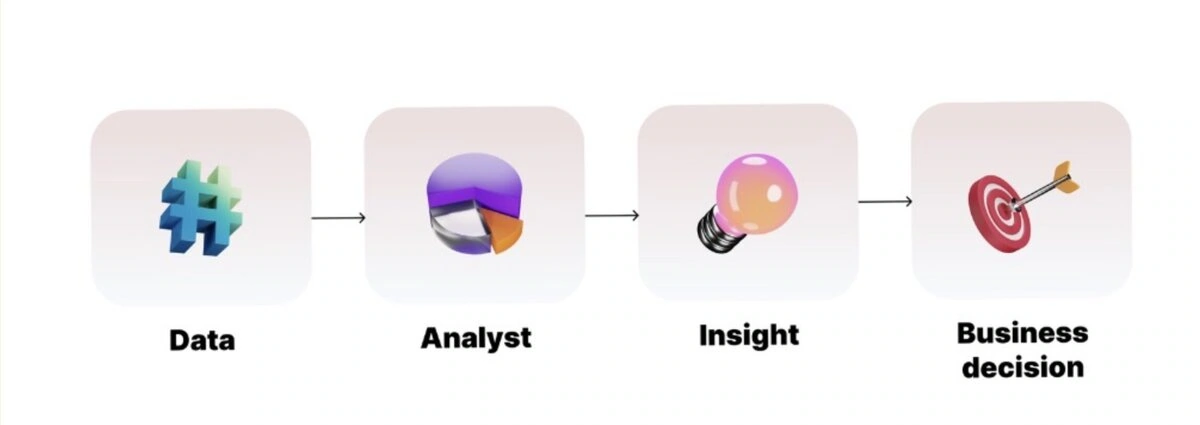
At its core, data analyst recruitment is a strategic process of sourcing professionals who can translate complex datasets into actionable business insights. This involves finding candidates who blend technical skills (like SQL, Python, and data modeling) with the ability to frame analysis in a business context. Top companies such as Amazon and Netflix rely heavily on data analytics to power personalization, drive operations, and inform critical decisions – an indication of how recruiting the right analytical talent fuels success.
Organizations at various stages stand to gain:
For instance, Amazon utilizes data analytics to personalize shopping experiences, dynamically price products, optimize inventory, and enhance logistics. Similarly, Netflix analyzes viewing trends to power more than 80% of its content recommendations and to inform content commissioning, like the decision to produce House of Cards based on viewer data.
Recruiting skilled data analysts enables businesses to harness insights across functions:
For major companies, the impact is clear: Amazon refines pricing strategies, personalization, and logistics with its analytics-driven engine, while Netflix leverages data for recommendations, personalized thumbnails, streaming optimization, and content investment decisions.
Strategically recruiting data analysts empowers companies to move from reactive to proactive decision-making. According to a recent study, organizations that rely on data management tools for decision-making are 58% more likely to exceed their revenue goals, while data-driven companies outperform laggards by 162% in significantly surpassing those goals, underscoring how strong analytics talent directly translates into measurable business advantage. It promotes:
In today’s data-centric world, success increasingly hinges on having talent that can bridge the gap between raw numbers and strategic outcomes.
The true value of a data analyst lies in turning raw numbers into actionable insights that influence decisions across every level of the business.
Do you have IT recruitment needs?
The data analytics market is undergoing rapid transformation, shaped by technological innovation and shifting business priorities. Enterprises no longer view analytics as a support function but as a core driver of competitiveness and growth. Emerging approaches such as cloud-native solutions and machine learning integration are redefining how organizations harness data. At the same time, research consistently shows that companies using analytics effectively achieve stronger decision-making and prominent efficiency gains. Below is an overview of the primary trends of the data analytics market:
Organizations are increasingly shifting from legacy systems toward cloud-native platforms, enabling real-time scalability and faster deployment. Data-as-a-Service models are gaining traction, allowing businesses to access, integrate, and analyze large datasets without heavy infrastructure costs. This trend reduces time-to-insight and opens advanced analytics to a wider range of companies. As a result, demand is rising for data engineers and cloud specialists skilled in platforms like AWS, Azure, and Google Cloud to manage and optimize these environments.
Artificial intelligence and machine learning are becoming standard within analytics platforms, powering predictive and prescriptive models. Companies apply these technologies to forecast demand, optimize logistics, and personalize customer experiences. The integration not only enhances accuracy but also automates insights, reducing reliance on manual reporting and speeding up decision cycles. This evolution drives hiring for data scientists, ML engineers, and AI-focused analysts capable of building and interpreting complex predictive models.
The rise of IoT and connected devices has fueled demand for real-time analytics at the edge of networks. Businesses rely on this capability for instant monitoring in manufacturing, transportation, and healthcare. Edge analytics minimizes latency, ensures operational responsiveness, and supports continuous optimization of processes where even seconds can drive value. Consequently, companies seek professionals experienced in IoT data management, real-time processing tools, and sensor-based data pipelines.
Analytics is now considered a top executive priority, with over 87% of enterprises ranking it as central to strategy. Chief Data and Analytics Officers (CDAOs) increasingly oversee both data and AI initiatives. This shift signals the growing recognition that competitive advantage relies on systematically embedding analytics into governance and operations. The trend also fuels demand for senior roles such as Data Directors and Analytics Managers who can align technical teams with business strategy.
Research highlights consistent advantages: better strategic decisions (69%), improved operational control (54%), deeper customer understanding (52%), and cost reductions (47%). Academic studies further link analytics adoption to measurable productivity gains of 3-7%. Together, these findings demonstrate that organizations investing in analytics not only optimize processes but also strengthen long-term competitiveness. As analytics proves its value, more firms are expanding recruitment across roles that turn insights into measurable business outcomes – from data visualization experts to business intelligence leads.
Analytics is no longer a support function. It has become a core driver of competitiveness, shaping strategy, efficiency, and long-term growth.
The ability of an organization to thrive in today’s data-rich environment depends on its analytical capabilities. Hiring skilled data analysts enables businesses to move from intuition to insight, turning information into a strategic advantage. Below are the core, research-backed benefits that make data analyst recruitment not just valuable, but indispensable.
Studies consistently show that data analytics enhances the accuracy, speed, and consistency of business decisions. By relying on structured data rather than assumptions, organizations can align their strategies with real-world trends, reduce uncertainty, and act more quickly on opportunities.
Data analysts identify hidden inefficiencies and process bottlenecks that manual reviews often overlook. Through rigorous data modeling, they identify areas where resources are underutilized, streamline workflows, and reduce operating costs – outcomes consistently emphasized in both academic and industry research.
Analytics turns raw data into a clear understanding of customer behavior. Skilled analysts translate usage patterns, feedback, and purchase trends into targeted actions that improve personalization, customer satisfaction, and long-term loyalty.
Empirical findings confirm that analytics talent directly correlates with performance. Research shows that organizations with more data analysts report higher strategic accuracy, stronger operational control, and measurable revenue growth – up to 8% higher revenue and 10% lower costs. Large-scale studies also indicate a clear link between local availability of analytics professionals and improved firm outcomes, underscoring the business value of recruiting this expertise.
Below is a snapshot of average annual salaries for data analysts across key global regions, based on Glassdoor data as of August 2025. These numbers are estimates of base pay and serve as general guidance; actual offers may vary depending on seniority, industry, and local cost of living.
| Region | Junior (USD/yearly) | Mid (USD/yearly) | Senior (USD/yearly) |
|---|---|---|---|
| United States | ~$63000 | ~$92000 | ~$129000 |
| Western Europe (France, Germany, etc.) | ~$42000 | ~$58000 | ~$79000 |
| Eastern Europe (Poland, Romania, etc.) | ~$27000 | ~$35000 | ~$50000 |
| Asia (India, Vietnam, etc.) | ~$7500 | ~$12000 | ~$25500 |
Western European data analyst salaries are approximately 35-40% lower than in the United States, providing solid nearshoring value for companies seeking cost efficiency within the same time zone. Eastern Europe offers even greater savings: around 55-60% lower than US averages, while maintaining a strong technical talent base. Asian regions, such as India and Vietnam, present the most cost-effective option, with salaries roughly 80-85% below US levels, making them ideal for large-scale, budget-sensitive analytics operations.
Demand for analytics and AI-capable talent continues to outstrip supply. Leaders widely cite skills shortages as a primary barrier to adopting data-driven and AI practices, with competition intensifying across industries and geographies. This imbalance lengthens searches and inflates compensation, especially for hybrids who blend analytics, ML, and business fluency.
Our approach
At DevsData LLC, we run skills-first, global searches: competency mapping against the stack (SQL/Python, BI, ML-lite) plus domain fluency. We benchmark offers to market data and cultivate passive pipelines in multiple regions to counter offer pressure. Our talent communities and referral flywheel surface scarce profiles faster, without compromising fit.
Many companies conflate “data analyst,” “analytics engineer,” and “data scientist,” or set goals without agreed KPIs. Cultural and leadership frictions often stall progress more than technology does, leading to mismatched hires and disappointing impact.
Our approach
We start every engagement with a scoping workshop: clarify decisions to be improved, success metrics, stakeholders, and toolchain. We produce a role scorecard (outcomes, competencies, level rubric) before sourcing. Candidates then present brief business cases tied to those KPIs, so that hiring teams can see exactly how the hire will move metrics from day one.
Even when analysts are strong, weak data literacy among stakeholders limits adoption and ROI. According to Gartner’s 2024 Data Literacy Survey, poor data literacy and related skills gaps are among the top roadblocks to data and analytics (D&A) success, hindering analysts’ ability to influence decisions.
Our approach
We prioritize translator capabilities: communication, framing, and stakeholder management. Our process includes exec-level storytelling exercises (insight → decision → action) and cross-functional panel interviews. We also advise clients on pairing analysts with business owners and setting shared definitions, so that insights are understood, trusted, and acted on.
Traditional interviews tend to reward surface-level knowledge, leaving little room to measure practical aptitude or real problem-solving ability. Many assessments overlook practical aptitude, query design, experiment hygiene, and trade-offs, while simultaneously introducing bias. Industry guidance increasingly recommends structured, evidence-based evaluations over free-form interviews.
Our approach
We rely on structured, role-relevant work samples to evaluate candidates. Instead of generic tests, they complete time-boxed SQL or analysis tasks using anonymized datasets. Each submission is scored against a clear rubric, and candidates walk through their reasoning live to demonstrate the depth of their thought. When coding is less central, the focus shifts to problem framing and KPI logic. Trained interviewers apply consistent rubrics, which not only raise quality but also reduce bias. This approach also delivers faster signals, helping teams make hiring decisions with greater confidence.
Poor data quality and fragmented governance erode analyst productivity and credibility. Gartner reports highlight persistent data-quality costs and the prevalence of weak measurement; leading AI adopters also report governance and integration hurdles. Analysts who can diagnose lineage and policy constraints are scarce.
Our approach
We assess candidates on their ability to work with messy datasets. They’re asked to profile the dataset and define trust rules, then recommend governance improvements like access controls or cataloging. Instead of abstract exercises, our scenarios focus on reconciling KPIs and showing how to escalate issues with stakeholders in practical terms. We also guide clients in evaluating their stack and look for “glue” skills: analytics engineering and governance know-how that make analysts more effective.
Rigid on-site policies and narrow geo targets drastically reduce response and application rates. LinkedIn’s research shows flexible work policies lift candidate engagement and applications, giving employers a measurable hiring edge.
Our approach
We help clients design hybrid or remote models and establish clear overlap windows for collaboration. For distributed teams, we introduce hub-and-spoke setups only where they add efficiency. Our cross-border sourcing draws on multiple talent pools while ensuring compliance. When on-site presence is required, we extend the hiring radius and support relocation with tailored packages. We also adjust interview sequencing to limit unnecessary travel, which raises acceptance rates without lowering standards.
Do you have IT recruitment needs?
Selecting a partner for data analyst hiring is a strategic decision. The right agency will understand role taxonomy, build credible pipelines fast, and run fair, evidence-based assessments that predict on-the-job impacts. Use the criteria below as a practical checklist and scoring aid:
Website: www.devsdata.com
Team size: ~60 employees
Founded: 2016
Headquarters: Brooklyn, NY, and Warsaw, Poland
DevsData LLC has built its reputation as a trusted partner in data analyst recruitment, helping companies secure professionals who can transform raw information into actionable business insights. With over nine years of experience in the market, the agency has supported both global corporate clients and fast-growing startups from diverse regions, including the US and Israel. This broad exposure allows the team to understand the different needs of enterprises at scale as well as agile, innovation-driven businesses.
The company’s recruitment methodology is rooted in both reach and rigor. DevsData LLC maintains an extensive database of 65000 pre-vetted candidates, giving clients rapid access to specialized talent pools. Each candidate undergoes a rigorous interview process, including a 90-minute problem-solving challenge, designed to evaluate not only technical proficiency but also communication skills and business acumen. This ensures that selected professionals are capable of working effectively in cross-functional, international environments.
DevsData LLC operates under a success-fee model, which aligns its incentives with client outcomes. Every engagement is further secured with a guarantee period, reducing hiring risk and providing confidence in long-term fit. The agency also distinguishes itself by holding an official, government-approved license for recruitment services, ensuring compliance with industry standards and regulations.
Over the years, the firm has successfully delivered 100+ recruitment projects for more than 80 clients, consistently matching businesses with talent that drives measurable impact. This track record is reflected in its strong reputation, with top ratings of 5/5 on platforms like Clutch and GoodFirms.
Finally, the team itself is international in scope, with US specialists contributing to recruitment processes and advising on market-specific dynamics. By combining deep expertise, global reach, and a proven methodology, DevsData LLC positions itself as a reliable choice for organizations seeking to build strong data analytics teams.
One of the many successful recruitment projects in DevsData LLC’s portfolio involved Caraway, Inc., a fast-scaling US-based eCommerce brand specializing in eco-conscious cookware and kitchen essentials. As the company experienced rapid growth, its technical infrastructure lagged behind demand, leading to performance bottlenecks, scalability issues, and challenges in rolling out new eCommerce features. Caraway urgently required a lead software engineer who could go beyond coding – someone capable of owning technical strategy, guiding architectural decisions, mentoring junior developers, and ensuring a sustainable engineering culture.

DevsData LLC was selected due to its proven track record in placing senior technical leaders in high-growth companies. Using its proprietary network and structured evaluation process, the agency sourced, assessed, and delivered a highly qualified candidate within just three weeks, well below industry averages for such senior roles. The chosen engineer brought not only deep expertise in Caraway’s stack (JavaScript, React, PHP, WooCommerce, Laravel, Node.js) but also leadership skills critical for managing a junior team and balancing short-term deliverables with long-term scalability.
Business benefits delivered
By placing the right talent, DevsData LLC helped Caraway strengthen its digital infrastructure, improve time-to-market, and safeguard customer experience during critical growth periods. This success illustrates how the agency goes beyond hiring, providing business outcomes that drive competitive advantage.
Looking to hire data analysts who can turn raw information into strategic insight?
Partner with DevsData LLC to access a global network of pre-vetted professionals skilled in analytics. Contact us at general@devsdata.com or visit www.devsdata.com to start building your data analytics team today.
The rise of data-driven strategies has transformed how companies plan, operate, and grow. Skilled data analysts turn complex datasets into actionable insights that improve forecasting, optimize processes, and reveal new revenue opportunities. Their work directly supports cost control, product development, and customer retention, making analytics talent central to business performance. As advanced technologies like AI, automation, and real-time analytics gain traction, the demand for qualified analysts continues to rise faster than the available supply.
Recruiting data analysts is not without its challenges. Organizations often face hiring challenges: limited talent supply, unclear role definitions, and misaligned expectations between managers and candidates. On top of that, analysts must combine technical ability with communication skills to shape business decisions effectively. Addressing these issues calls for specialized recruitment. Fair evaluation methods then help ensure the right people move forward. Regional differences in compensation also add complexity, making it essential to understand global hiring landscapes from the US, and Western Europe to cost-efficient hubs in Eastern Europe and Asia.
For businesses, the benefits of investing in the right analytics talent are clear: measurable improvements in decision-making, enhanced operational efficiency, improved customer engagement, risk reduction, and stronger competitive positioning. As more organizations integrate data analytics into every aspect of their operations, the need for well-structured recruitment strategies and trusted hiring partners will only increase.
With more than nine years of experience, a proprietary database of 65000 vetted candidates, and a rigorous interview process that ensures both technical and communication excellence, DevsData LLC has positioned itself as a reliable partner in data analyst recruitment. Working with both global enterprises and high-growth startups, the agency combines international expertise, a success-fee model, and a government-approved license to deliver high-impact recruitment outcomes. Its proven track record of 100+ completed projects for over 80 clients and top client ratings reflect a consistent ability to align businesses with the analytical talent needed to translate data into real-world advantage.
Any questions or comments? Let me know on Twitter/X.
Discover how IT recruitment and staffing can address your talent needs. Explore trending regions like Poland, Portugal, Mexico, Brazil and more.

 Frequently asked questions (FAQ)
DevsData – your premium technology partner
DevsData is a boutique tech recruitment and software agency. Develop your software project with veteran engineers or scale up an in-house tech team of developers with relevant industry experience.
Free consultation with a software expert
🎧 Schedule a meeting
FEATURED IN


DevsData LLC is truly exceptional – their backend developers are some of the best I’ve ever worked with.”

Nicholas Johnson
Mentor at YC, serial entrepreneur


 Build your project with our veteran developers.
Explore the benefits of technology recruitment and tailor-made software.
Learn how to source skilled and experienced software developers.
Build your project with our veteran developers.
Explore the benefits of technology recruitment and tailor-made software.
Learn how to source skilled and experienced software developers.

Rebecca Botvin

Commercial Director

Tom Potanski
Manager




Categories: Big data, data analytics | Software and technology | IT recruitment blog | IT in Poland | Content hub (blog)
















careers@devsdata.com









general@devsdata.com

"I interviewed about a dozen different firms. DevsData LLC is truly exceptional – their backend developers are some of the best I've ever worked with. I've worked with a lot of very well-qualified developers, locally in San Francisco, and remotely, so that is not a compliment I offer lightly. I appreciate their depth of knowledge and their ability to get things done quickly."

Nicholas Johnson
CEO of Orange Charger LLC,
Ex-Tesla Engineer,
Mentor at YCombinator
"DevsData reached out to us, as we've been looking to grow our engineering team in Europe and Poland. Communicating efficiently and professionally, DevsData made a strong impression with their understanding of the recruitment challenges we were facing. They designed a tailored recruitment process for our needs. I was impressed with the technical depth of their approach."

Karim Butt
Co-Founder & CTO at GlossGenius, Inc.
"Out of all the vendors we work with, DevsData clearly stands out. The quality of developers they deliver is beyond what we've received from any other vendor, and they've been able to send profile recommendations very quickly. I'm happy to be their reference for other companies from Israel and talk about their recruitment abilities and what they delivered for us."

Ran Eyal
Senior Manager at
ZIM Integrated
Shipping Services Ltd.
"DevsData demonstrated a strong degree of proactivity, taking time to thoroughly understand the problem and business perspective, and continuously suggesting performance and usability enhancements. Their app exceeded my expectations. I've worked with DevsData on numerous projects over the last 3 years and I'm very happy. Being both responsive and honest in communication."

Jonas Lee
Partner & Executive VP of Verus,
Financial LLC, Investor,
& Serial Entrepreneur
Acknowledgments